

How Does a Portable Slit Lamp Compare to a Desktop Unit for Field Screenings?
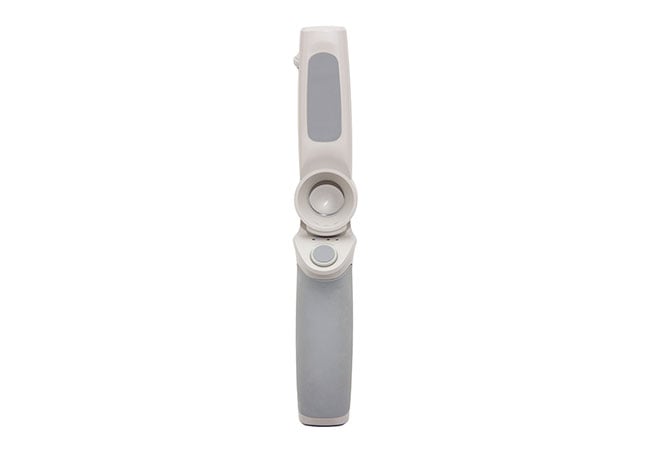
You need to examine a patient who cannot sit upright. Your desktop slit lamp is useless. That moment is exactly why the portable slit lamp exists — and why more distributors are stocking both.
A portable slit lamp delivers equivalent anterior-segment diagnostic capability in a handheld, battery-powered form. It sacrifices some magnification range compared to a full desktop unit but gains mobility for field screenings, bedside exams, pediatric cases, and veterinary use. For clinics running outreach programs or mixed patient populations, both types serve different roles.
The choice between portable and desktop is rarely either/or. It is about knowing which clinical scenarios each device was designed to solve — and building your equipment lineup around real workflow needs.
What Are the Key Performance Differences Between Portable and Desktop Slit Lamps?
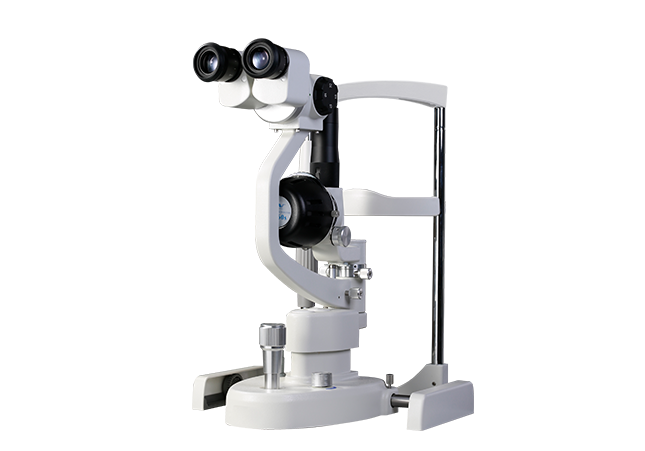
Desktop and portable slit lamps share the same optical principle. Both use a focused beam of light and a binocular microscope to examine the anterior segment. But the engineering trade-offs are significant.
Desktop slit lamps offer 5-step magnification (typically 6×–40×), superior illumination consistency, and a wider range of accessories. Portable units such as Hongdee's PSL-150, S-150, and PSL-100 compress performance into a handheld form with battery power, accepting some reduction in magnification steps while preserving diagnostic-grade optical quality.
Optical and Illumination Quality
A well-made portable slit lamp uses LED illumination. LED provides consistent color temperature and long service life — important for a device that is handled, transported, and charged regularly. Halogen illumination is still found in some desktop models, but LED has become the standard across both form factors at the professional level.
The slit beam adjustability — width, height, and angle — is the core diagnostic tool in any slit lamp exam. In portable models from Hongdee, this functionality is preserved. You can examine corneal layers, the anterior chamber, the lens, and vitreous base just as you would on a benchtop unit.
Where portable units typically simplify is in step-count magnification. A desktop unit may offer 5 discrete steps from 6× to 40×. A portable unit often offers 2–3 steps, which covers the majority of clinical needs but limits fine-detail magnification for specialized anterior-segment surgery planning.
Ergonomics and Setup Time
| Feature | Desktop Slit Lamp | Portable Slit Lamp |
|---|---|---|
| Setup time | 2–5 min (table positioning, alignment) | Under 1 min |
| Exam position | Patient must be seated at chin rest | Supine, seated, or any position |
| Portability | Fixed to table or stand | Handheld, case-included |
| Battery | Mains power only | Battery-powered (swap pack available) |
| Weight | 5–15 kg (unit + table) | Under 1.5 kg |
| Magnification steps | 5-step (6×–40×) | 2–3 step |
The ergonomic difference matters enormously in certain contexts. Bedridden patients, elderly patients with limited mobility, young children, and animals cannot reliably be positioned at a standard chin rest. For these patients, a portable slit lamp is not a compromise — it is the only practical tool.
Image Documentation
Both portable and desktop slit lamps can be paired with imaging modules. Hongdee offers the Phonto smartphone module and the Phoenix PC-based module, both compatible with major slit lamp platforms including their own desktop models.
For portable units used in outreach settings, the