

Why Is the Auto Perimeter Often the Last Device Clinics Buy — and Should It Be?
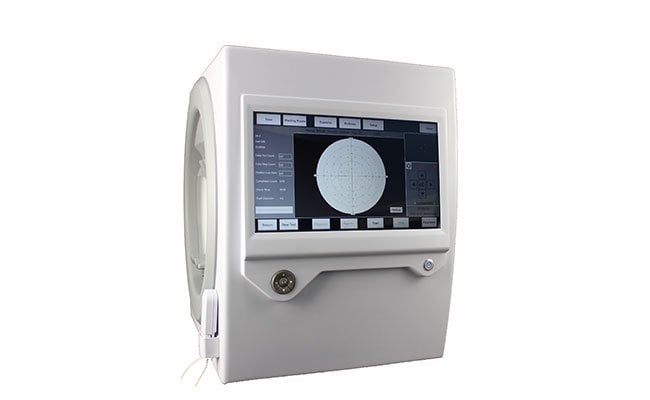
Clinics buy slit lamps first. Then a tonometer. Then a fundus camera. The auto perimeter sits on the wishlist for years. By the time they buy one, they have already missed diagnosable glaucoma in patients who came through their door earlier.
The auto perimeter is delayed because it is perceived as a specialist tool. It should not be. Visual field testing is essential for detecting glaucoma at the stage where intervention prevents blindness — not after significant damage has occurred. A clinic without perimetry capability cannot offer complete glaucoma care. The ROI calculation changes completely once the missed revenue from referrals is included.
The question is not whether a clinic needs an auto perimeter. It is whether they can afford to keep not having one.
What Diseases Make Perimetry Testing Critical?
Visual field testing is not only for glaucoma. The breadth of conditions it detects is exactly why an auto perimeter belongs in a general ophthalmology practice, not just a specialist glaucoma clinic.
Perimetry is clinically critical for glaucoma (detecting characteristic arcuate defects and nasal steps), neurological conditions affecting the visual pathway (hemianopias from stroke or tumor), retinal diseases (central and paracentral scotomas in macular degeneration), and optic nerve pathology (cecocentral defects). A 22-program auto perimeter like the AP-100 covers all of these in one device.
Conditions Requiring Visual Field Assessment
| Condition | Visual Field Defect Type | Urgency |
|---|---|---|
| Glaucoma | Arcuate defect, nasal step, altitudinal loss | Chronic management |
| Stroke / CVA | Homonymous hemianopia | Acute + rehabilitation |
| Pituitary tumor | Bitemporal hemianopia | Urgent referral |
| Macular degeneration | Central scotoma | Ongoing monitoring |
| Retinitis pigmentosa | Peripheral constriction | Genetic counseling + monitoring |
| Optic neuritis | Cecocentral scotoma | Acute + MS workup |
| Diabetic retinopathy | Variable, parafoveal loss | Screening + monitoring |
A clinic that sees even modest numbers of patients with these conditions — and every general ophthalmology practice does — has immediate clinical use for an auto perimeter. The device justification is not "if I ever get a glaucoma patient." It is "I already have patients who need this and I am referring them out."
The Hidden Cost of Referrals
Every referral for visual field testing is revenue leaving your clinic. If you refer 10 patients per month to a perimetry center, and each test generates a professional fee, that is recurring revenue being captured by another practice. Over 12 months, the lost revenue often exceeds the cost of purchasing an auto perimeter.
How Does Test Time and Patient Compliance Affect Purchase Decisions?
The complaint most often heard from clinics that delayed buying a perimeter: "The tests take too long and patients do not cooperate." Both concerns are addressed by modern perimeter design.
Modern auto perimeters using SITA-like algorithms complete full threshold testing in 3–7 minutes per eye rather than the 12–15 minutes required by older full-threshold methods. The Hongdee AP-100's built-in voice guidance system significantly improves patient compliance, reducing false positives and test-retest variability in elderly and first-time patients.
Why Test Time Matters for Practice Flow
A 15-minute perimetry test per eye occupies 30 minutes of chair time per patient. At 20 patients per day, that is not viable in a general ophthalmology practice. A 5-minute test per eye changes the calculus completely — it fits within the same appointment slot as a comprehensive eye examination.
The AP-100's SITA-like testing reduces test time by up to 50% compared to full-threshold methods. This is not a marketing claim — SITA-like algorithms use statistical modeling of expected sensitivity values to minimize the number of stimulus presentations needed while maintaining diagnostic accuracy. The practical result is shorter tests, less patient fatigue, and more reliable results from patients who struggle with long procedures.
Voice Guidance and Its Impact on Result Quality
Perimetry requires sustained attention. Patients must fixate on a central target, respond to peripheral stimuli, and maintain this focus for several minutes. Any lapse in attention creates false negative results — missed responses that look like field loss but are actually inattention.
The AP-100's voice prompt system guides patients through the procedure in real time, reminding them to maintain fixation and reassuring them that the test is progressing normally. For elderly patients who are unfamiliar with the task, or patients from backgrounds where medical testing is anxiety-provoking, this guidance consistently improves first-test quality and reduces the rate of repeat testing due to unreliable results.
What Features Separate Entry-Level from Professional Auto Perimeters?
Not all auto perimeters are equivalent. The features that separate adequate from professional grade determine clinical reliability over a decade of use.
Professional-grade auto perimeters offer SITA-like algorithms for short test times, at least 22 test programs for comprehensive disease coverage, DICOM export for EMR integration, auto eye recognition for correct patient identification, and onboard storage for longitudinal comparison of 10,000+ tests. Entry-level devices may lack DICOM, limit test programs, or require manual data transfer — creating workflow friction that compounds over time.
Feature Comparison: Entry vs. Professional Grade
| Feature | Entry Level | Professional (AP-100) |
|---|---|---|
| Test programs | 5–10 | 22 |
| Algorithm | Full threshold (slow) | SITA-like (fast) |
| Test time per eye | 10–15 min | 3–7 min |
| Voice guidance | No | Yes |
| DICOM export | No | Yes |
| Auto eye recognition | No | Yes |
| Onboard storage | Limited | 10,000+ tests |
| Connectivity | USB only | Ethernet + WiFi |
| Blind zone test | No | Yes |
The AP-100 specifications — particularly the combination of 22 programs, voice guidance, DICOM output, and WiFi connectivity — represent the minimum viable specification for a professional ophthalmology practice that intends to build a perimetry database for longitudinal patient monitoring.
How Do You Justify the ROI of an Auto Perimeter to a Skeptical Clinic Owner?
The ROI argument for an auto perimeter is more concrete than most equipment purchases because the alternative — referring patients out — has a directly calculable cost.
The ROI case for an auto perimeter rests on three numbers: the monthly revenue from visual field tests you currently refer out, the monthly revenue from new services you can offer once you have perimetry in-house, and the risk reduction value from detecting glaucoma before irreversible damage occurs. Most clinics achieve payback within 12–24 months from a combination of captured referral revenue and new glaucoma management billings.
Building the ROI Case
Step 1: Count the monthly referrals. Ask your reception to pull the last three months of referral letters for visual field testing. Multiply by the professional fee for that service in your market. This is your current monthly revenue loss.
Step 2: Add new service revenue. With in-house perimetry, you can offer glaucoma screening as a standalone service, monitor existing glaucoma patients in-house rather than co-managing with a specialist, and bill for the test during comprehensive examinations where you currently skip it.
Step 3: Risk-adjusted benefit. Clinics that detect and treat glaucoma earlier reduce the severity of the condition in their patient population — which is both clinically significant and a factor in reputation and referral generation.
The AP-100's price point combined with this three-part calculation typically produces a payback period that justifies immediate rather than deferred purchase.
Conclusion
The auto perimeter is delayed because it is seen as a specialist device. But any clinic treating patients at risk of glaucoma, retinal disease, or neurological conditions needs perimetry in-house. Modern SITA-like algorithms, voice guidance, and DICOM connectivity remove the practical barriers that justified delay. The ROI case is built on captured referral revenue, new glaucoma service billings, and earlier disease detection — all directly quantifiable.