

What Should Distributors Know About Sourcing OCT Equipment from China?
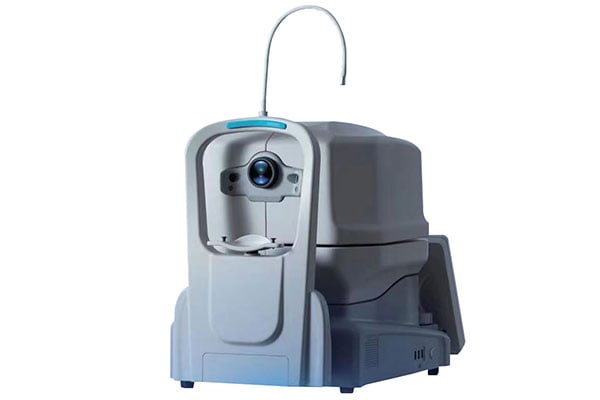
OCT is one of the highest-value devices in an ophthalmology product catalog. It is also one of the most scrutinized purchases a clinic makes. A distributor who understands the technology and the sourcing process closes deals faster and retains customers longer.
Sourcing OCT equipment from China offers distributors significant cost advantages over European and Japanese brands while delivering comparable spectral-domain performance. The critical considerations are certification alignment with your target market, after-sales support infrastructure, and supplier technical capability. A Chinese OCT manufacturer with CE marking, DICOM compliance, and a documented service program is a credible alternative to premium brands for most clinical applications.
The days when "Chinese OCT" meant questionable quality are over. The question now is which supplier can document their quality claims.
How Does Spectral-Domain OCT Differ from Swept-Source OCT?
Buyers who have done their research will ask this question. Your ability to answer it with confidence determines whether they trust your recommendation.
Spectral-domain OCT (SD-OCT) uses a broadband light source and a spectrometer to capture all depth information simultaneously, achieving scan speeds of 24,000–36,000 A-scans per second. Swept-source OCT (SS-OCT) uses a tunable laser source with longer wavelength, enabling deeper tissue penetration and higher scan speeds, but at significantly higher cost. For most clinical applications — retinal screening, glaucoma, macular analysis — SD-OCT provides sufficient performance at a fraction of SS-OCT pricing.
Comparing SD-OCT and SS-OCT for Clinical Use
| Parameter | Spectral-Domain OCT | Swept-Source OCT |
|---|---|---|
| Light source | Broadband SLD (~840 nm) | Tunable laser (~1050 nm) |
| Scan speed | 24,000–100,000 A-scans/sec | 100,000–400,000 A-scans/sec |
| Tissue penetration | Retina, RNFL, macular layers | Deeper choroid, vitreoretinal interface |
| Image quality | Excellent for retinal layers | Better for sub-RPE structures |
| Cost | Moderate | High |
| Best for | General retinal and glaucoma | Choroidal imaging, advanced retinal disease |
Hongdee's OCT system uses spectral-domain technology with a scan speed of 24,000–36,000 A-scans per second and axial resolution of ≤6 µm in tissue. This specification is directly competitive with established SD-OCT platforms from brands at two to three times the price.
For distributors selling into general ophthalmology or optometry markets — the largest segment of the global OCT market — SD-OCT covers the full range of clinical applications that most buyers actually need.
What Certifications Matter for Importing OCT into Different Markets?
Certification is the single most important gating factor in OCT distribution. An uncertified device cannot be legally sold. A device with the wrong certification for your target market cannot be legally imported.
CE marking (EU) is the baseline international certification for OCT equipment and is recognized or used as a reference standard in most markets outside North America. FDA 510(k) clearance is required for the US market. TGA registration applies in Australia. ANVISA registration in Brazil. PMDA approval in Japan. Most Chinese OCT manufacturers pursuing export markets hold CE as the primary certification and obtain market-specific approvals for additional territories.
Certification Requirements by Region
| Market | Required Certification | Key Authority | Typical Timeline |
|---|---|---|---|
| European Union | CE marking (MDR 2017/745) | Notified body | 6–18 months |
| United States | FDA 510(k) clearance | US FDA CDRH | 3–12 months |
| Australia | TGA registration (ARTG listing) | TGA | 3–9 months |
| Brazil | ANVISA registration | ANVISA | 6–24 months |
| Japan | PMDA shonin | PMDA | 12–24 months |
| Middle East (GCC) | Saudi SFDA / UAE DOH | National authorities | 3–12 months |
| Southeast Asia | Varies by country (HSA/SG, BPOM/ID) | National authorities | 3–12 months |
Distributors entering a new market should request certification documentation before signing any distribution agreement. For CE, ask for the Declaration of Conformity and the name of the Notified Body. For FDA, ask for the 510(k) clearance letter. These are public documents that can be verified independently.
Hongdee holds CE, ISO 9001, ISO 13485, ETL, FCC, and FDA certifications — covering the major international markets. This certification stack is the starting point for distribution in Europe, North America, and any market that uses CE as a baseline reference.
How Do You Evaluate After-Sales Support from a Chinese OCT Manufacturer?
OCT is a complex optical and electronic instrument. When something goes wrong — and eventually something always does — the quality of after-sales support determines whether your distribution relationship survives the incident.
Evaluating after-sales support from a Chinese OCT manufacturer requires assessing four factors: warranty terms, remote technical support capability, spare parts availability, and on-site service options. A manufacturer who can diagnose and resolve most issues remotely via video call, supply spare parts within 2 weeks, and provide on-site service through a trained local partner network covers the full range of after-sales needs for most distribution territories.
Questions to Ask Before Signing a Distribution Agreement
- What is the warranty coverage and what does it explicitly exclude? A 12-month full warranty on parts and labor is standard. Ask whether the warranty covers optical components specifically.
- What is the remote support response time? Next-business-day response via video call is a reasonable baseline. Ask for a real example of a remote diagnostic case they have resolved.
- Where are spare parts warehoused? Parts warehoused only in China will take 2–4 weeks to arrive internationally. A supplier with regional spare parts distribution in Europe, the Middle East, or Southeast Asia reduces this to days.
- Is on-site installation and training included in the purchase price? For a device as complex as OCT, installation by a trained technician is not optional — it is a liability management decision.
- What software update policy applies? Software is increasingly the differentiator in OCT performance. A supplier who provides free updates for the device lifetime is more valuable than one who charges per version.
What Margin Structure Works for OCT Distribution?
OCT is a high-ticket item with a longer sales cycle than basic diagnostic equipment. The margin structure needs to account for the additional pre-sales effort.
OCT distribution margins typically range from 25%–45% depending on market, competitive landscape, and whether service is included in the distribution package. Higher margins are achievable in markets with less direct competition and where the distributor provides installation, training, and ongoing service as a bundled offer — justifying a premium over competitors who drop-ship without support.
Margin Optimization Strategies
Bundle service contracts — A 2-year extended warranty sold alongside the OCT unit converts a one-time transaction into recurring revenue. Annual calibration and preventive maintenance contracts add a predictable income stream. This also creates stickiness: clinics are unlikely to switch suppliers while under a service contract.
OEM and private-label positioning — Hongdee offers OEM/ODM services on OCT equipment. A distributor who sells under their own brand rather than the manufacturer's brand can command a higher price point in markets where the Chinese manufacturer name is a price anchor. Private-label OCT is a legitimate strategy in markets where brand perception affects the final sale price.
Financing partnerships — OCT is a significant capital expense for many clinics. Working with local financing institutions or leasing companies to offer installment payment options directly expands the addressable market. Clinics that could not afford an outright purchase can afford a monthly payment.
Conclusion
Chinese-made SD-OCT delivers competitive clinical performance at significantly lower cost than premium alternatives. CE certification is the baseline entry requirement for most markets; FDA, TGA, and ANVISA cover North America, Australia, and Brazil respectively. After-sales support quality is the primary differentiator between credible Chinese suppliers and those to avoid. Margin optimization through service contracts, OEM positioning, and financing expands the OCT distribution opportunity beyond the initial hardware sale.